Pages

Thursday, 17 January 2019

Activity 3: Wind Beneath My Wings

Birds and bats are just two species of animal that are able to fly. Did you know that some fish, squirrels and snakes are also able to fly? Check out the ‘Top 10 Flying Animals of the World’ website to learn more about these incredible animals.
Once you have explored the site, choose one animal and create a digital learning object (DLO, eg. a poster) that tells us all about the animal. Be sure to include at least three interesting facts and a picture or two of your animal! Please follow these instructions for attributing your pictures properly.
Here is an example of a DLO that was created about lions.
On your blog, post a final copy of your DLO..
This is my DLO:

Activity 2: Flying Foxes

Not only is New Zealand home to many native birds but we also have a number of native bats. Some of these bats are really small while others are much larger. None, however, are as large as the largest bat in Australia. It is called the flying fox (pictured below) and it has a wingspan of up to 6 feet or 2 metres. Wow! That is taller than most of us!
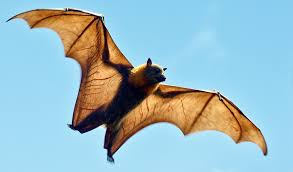
Flying foxes usually sleep during the day and hunt for food at night, using their ears to guide them through the darkness. Like other bats, they have the best hearing of any mammal. It is their ‘superpower.’
If you could have a superpower, what would it be? If I could choose, I would like to be able to fly. It would make it possible for me to fly back to Canada and visit my family whenever I wanted. How amazing would that be?!
On your blog, tell us what superpower you would like to have and why you’d like to have it.
The superpower that I would want to have is teleportation, I could get anywhere I wanted to with just a thought, get to school in less than 10 seconds and get back in less than 10 seconds if I forgot something.

Activity 1: Bird of the Year!

Aotearoa New Zealand is home to many different kinds (species) of native birds.  Sadly, about a third of our native bird species are at risk of disappearing forever (becoming extinct).
Each year, Forest and Bird New Zealand hold a ‘Bird of the Year’ competition where people can vote for their favourite native bird. This year, the winner was the kererū (or woodpigeon).
Go onto the Bird of the Year website, look through the native birds on the site, and choose one that interests you.
On your blog, write a short description of your bird. Where does your bird normally live? What does your bird normally eat?  Post a picture of the bird underneath your description. Be sure to attribute your picture properly.

The bird I chose is called the Black-fronted Tern (Tarapiroe), they live in coastal areas, they eat earthworms, grass grub larvae and skinks.
.Image result for what do black-fronted tern eat

Activity 3: Flying Fungi

In the middle of winter it can get quite wet and damp in New Zealand, can’t it? When it gets really damp, it is common for things like mould and fungi to start to grow. We can often see them on the walls, ceilings or floors of our houses or outside on footpaths, buildings or roadways. Some types of mould and fungi are so small that they can’t be seen. Some of these tiny fungi/mould can be found in the air. They are called ‘airborne fungi’ and they can be unhealthy for us.
Let’s imagine that we tested the air in your classroom and found 7 different kinds of mould. Eek! The cleaner says that it takes 5 days for each mould to be eradicated (removed). If the school had to remove each mould one at a time, how long would it take to remove all the mould from the classroom?

On your blog, tell us how you would solve this tricky maths problem. Be sure to also post your final answer in days or weeks.
To figure this questions out all I needed to do was multiple 5 by 7:
7 x 5 = 35
Since there are 7 days in a week it would take 5 weeks to remove the mould

Activity 2: Carbon Sinks Don’t Stink!

Every day a chemical compound called carbon dioxide (CO2) is produced and released into the air.  If it isn’t removed, it can become toxic for humans. Fortunately, there are a number of places where CO2 is absorbed (removed from the air). Two of the most common places are forests and oceans. They are called ‘carbon sinks’ because, like a sink, they gather, clean and drain things away that we don’t want. One of the largest carbon sinks in New Zealand is a forest in the south-western part of the South Island. It drains away 60% of our unwanted carbon!
Let’s imagine that you could design a sink that could gather up and then drain away any foods that you don’t like. On your blog, tell us what you would put in your special sink. If it was me, I would put rice pudding, brussel sprouts, custard, parsnips, and seafood chowder in the sink. Yuck! What about you?
On your blog, list all of the foods that you would put in your special draining sink..
Brussel sprouts
Asparagus
Chilli
Capsicum 
Peanut Butter (Crunchy & smooth)

Activity 1: Bee Informed

One of the most important, but least talked about, animals in New Zealand is the bumblebee. It was first introduced to New Zealand in 1885 to help pollinate a special plant called the ‘Red Clover.’ Today, bumblebees do many other important jobs, including the pollination of greenhouses and orchard crops. If the bees did not pollinate the plants, they would not survive.
For this activity, we would like you to bee-come detectives and to learn more about the mysterious, and often ignored, bumblebee. We will provide you with five sentences about bumblebees from the NZ Bumblebee Conservation Trust website and it is your job to fill in the blanks with the missing information about bees. Choose the phrase/word that makes the most sense from the list at the bottom. (Each phrase/word can only be used once).
To earn full points for this activity you must type all five sentences and then fill in the blanks for each one. Post the completed sentences on your blog.
Unbee-lievable Facts about Bumblebees
  • The word ‘bumblebee’ is a compound word (bumble + bee). The word ‘bumble’ means to Hum, Buzz, Drone.
  • Bumblebees can fly very quickly. They can reach ground speeds of 54 kilometres per hour (km/h).
  • Bumblebees are very strong! They carry up to 90 percent of their body weight in food with them to avoid starvation.
  • Bumblebees can do more work and carry more pollen than other bees, including honeybees. In fact, they can do up to 50 times as much work as a normal honeybee.
  • The number of bumblebees is declining in New Zealand due to a number of factors, including the removal of wildflowers and flowering trees, habitat loss, and extensive use of pesticides.

Activity 3: Burning Up…

On your blog, post a picture of your graph..
While it can get hot in New Zealand, especially in the middle of summer, it gets even hotter in places like Dallol (Ethiopia), Dasht-e Loot (Iran), Tirat Zvi (Israel), Kabili (Tunisia) and Bandar-e Mahshahr (Iran).
The hottest temperature on record in each place is: Dallol: 41oC; Dasht-e Loot: 71oC; Tirat Zvi: 54oC; Kabili: 55oC; Bandar-e Mahshahr: 51oC. Crazy ‘eh?!
For this activity, you are asked to use this information to create a graph. The graph should have a title along with the names of each city and their hottest recorded temperatures. You can draw the graph by hand or use a computer programme like Google Draw to create your graph. It’s completely up to you!

This is my graph: